
How Much Does CNC Prototyping Service Cost in 2026? A Buyer's Cost Model
A prototype's price is written in its tolerance callouts. A drawing that reads in plain plus-minus dimensions tells a shop to make a part; a drawing with feature control frames, datums, and geometric tolerances tells it to make a part that fits, and the difference is where prototyping cost actually comes from. Geometric dimensioning and tolerancing exists to make a requirement measurable, and measurability is the price of a precise prototype: every datum, every callout, and every Rule #1 envelope is a machining strategy, a CMM routine, and a line on the quote.
What does a CNC prototyping service quote actually pay for?
Strip any serious prototype quote back to its bones and the same lines appear underneath the formatting, with the GD&T verification line carrying real weight on a precise prototype.
| Line item | What it pays for | What moves it |
|---|---|---|
| Material | The stock at the grade and condition on the drawing | Grade, form, and whether the lot is verified against a mill certificate |
| Setup and programming | Fixturing from the datum structure, toolpath work, first-piece prove-out | The datum scheme decides the setups, and the setups land on one prototype |
| Machining time | Spindle minutes to cut each feature into its tolerance zone | Material toughness, feature count, and how tight each band is |
| Secondary operations and finishing | Threading, anodizing, plating, and similar steps on the prototype | Each step validates a process production will repeat |
| Grinding | The ±0.002 mm bands milling and turning cannot hold | A separate process family for the tightest tolerance and finish |
| GD&T verification | CMM time to prove the callouts against the datums | Each feature control frame becomes a measurement routine and a report |
There is no honest single number for a CNC prototype, because the tolerance callouts, the material, and the production intent decide it together. What stays consistent is the structure, and the structure is what makes a prototype quote readable and the GD&T auditable.
Why does the GD&T on the drawing set the price before the first cut?
The hub of this site is GD&T, and its argument is the cost model in miniature: geometric tolerancing differs from coordinate tolerancing because it describes a requirement the shop can actually verify. A plus-minus dimension locates a feature in two directions; a true position or profile callout locates it in the datum system as a relationship, which is what decides whether the part fits. The feature control frame on the drawing is the instruction the machinist and the CMM both read, and every characteristic it calls out is a cost line.
Read the drawing the way this site teaches, and the price becomes predictable. Datums decide how the part is fixtured and measured, so a clean datum structure keeps the setups and the CMM program short. Form controls such as flatness and straightness verify a surface against itself. Orientation controls — perpendicularity, parallelism, angularity — verify a surface against a datum. Location controls — position, concentricity, symmetry — verify where a feature sits in the system. Each class is a different measurement, and a part that stacks callouts pays for each one at the CMM. The tolerance you put on a prototype is the price you pay on the prototype and the process you lock for production.
What does a tolerance band actually cost on a prototype?
The index of this site asks the question directly — what tolerance should you put on a prototype, and what does it cost — and the answer is nonlinear, exactly as it is in production. Milling and turning on this floor hold ±0.003 mm on critical features, and precision grinding reaches ±0.002 mm, verified on Hexagon CMMs with process capability at Ppk ≥ 1.67 at the initial study on key characteristics and Cpk ≥ 1.33 on general characteristics. Capability is reported per characteristic: every report names the feature, its tolerance band, the sample size, the sigma method, and the study window. And a demonstrated Cpk of 1.851 on a representative length characteristic. Between the routine band and the grinding band, every step tighter changes the machine behavior, the tooling, and the measurement.
One more check on that number: the 0.4 mm band behind it is wide by design. Hold the same process spread against a ±0.005 mm feature and it fails outright, so read this figure as evidence about one characteristic on one run, not as a blanket tolerance claim.
On a prototype, the tolerance decision is about the future. The band you validate on the prototype is the band production has to hold on every part, so a callout that is tighter than the function needs is a premium paid twice — once on the prototype and once on every production part. Put the tolerance that the function actually needs on the drawing, keep the rest on the general block, and use Rule #1 (the envelope principle) the way it was designed: a feature's size limits also control its form, so a shaft specified to its envelope keeps its straightness and roundness without extra callouts. The prototype that validates a realistic tolerance is the prototype that prices production correctly.
How do fits and datums move the price?
A fit is where two machined parts decide whether they work together, and fits change the machining because they change the measurement. A clearance fit lets the process breathe; an interference or transition fit demands the feature sit in a narrow window where the measurement has to be exact. The service that reads the fits on your drawing knows which features carry the assembly, and that is where the verification budget should go.
Datums carry the same logic. The index page of this site puts it in terms a buyer can act on: datums decide whether a part fits. A datum chosen well — a feature machined early, stable, and easy to fixture — keeps the machining and the measurement aligned with how the part sits in the assembly. A datum that forces re-fixturing multiplies the setups and the error chain. When you hand a GD&T prototype to production, the datum scheme is the contract both sides share, and the prototype that establishes the datums correctly is the prototype production does not have to re-engineer.
Which material should a prototype-service budget assume?
Material moves a prototype quote twice: once as stock, and again as machinability at the cutting edge where the tolerance is being held. Aluminum 6061 is the economical default for housings and brackets; the free-machining grades keep parts economical where the application allows; and the demanding grades — 304 and 316 stainless, titanium, and the heat-treatable steels — run slower, deflect more, and make a tight GD&T band harder to hold. And on a prototype, the material must be the production material: a part validated in a stand-in alloy is a part whose production tolerances were never proven.
Two rules keep the material line honest. First, name the grade and the condition — temper and heat treatment change the finished part as much as the grade does. Second, verify the shop checks incoming stock against its mill certificate, because a substituted alloy passes every dimension and fails in service. A prototype machined from the verified production grade is a prototype whose material behavior — thermal growth, deflection, work-hardening — is the behavior production will see.
How does quantity enter a prototyping-service budget?
The MOQ is one piece, and the setup and the GD&T prove-out that make a one-off expensive are the setup and the measurement routine production will amortize. Budget the prototype at MOQ 1 to prove the part and the process, then the production tier on the same page to see where the fixed lines land as quantity rises. The prototype quote and the production quote are two ends of one curve, and a service that shows only the prototype end has hidden the production price, or the setup you will pay again.
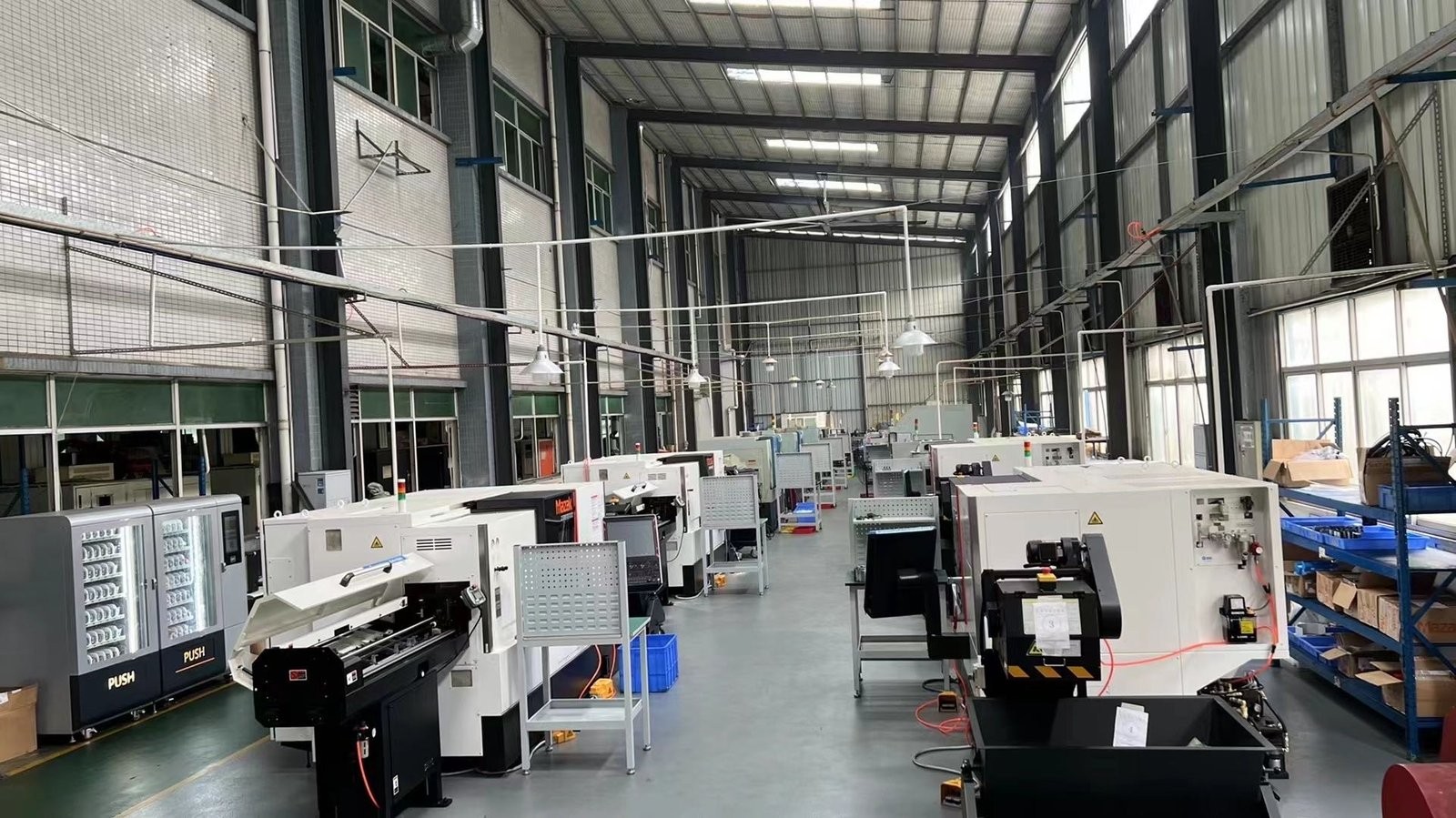
The floor behind this site runs 100+ machines — 3-axis (50+), 4-axis (20+), 5-axis (20+), 25+ lathes, and 7+ grinders — with an engineering team organized around GD&T and more than 20 inspection instruments behind it. A prototyping service with that depth can route the prototype to the machine that will run production, prove the GD&T on the same equipment, and hand the process to production without starting over. That continuity is the difference between a prototype and a detour.
What hidden costs sit inside a prototyping-service quote?
The visible lines are half the price; the other half hides in what the quote does not say. A quote that prices sizes but not the feature control frames has hidden the CMM routines the drawing demands. A quote that treats a datum as decoration has hidden the setups the part will need. A quote that prices a ±0.002 mm feature without naming grinding has hidden the process family that holds it. A quote that absorbs GD&T verification into the margin has hidden the report you will need to hand production. And a quote from a service that cannot show its machine list, its CMM bench, or its certificate numbers has hidden the verification that is the product.
The supplier itself is the largest hidden cost of all, and for a prototype, the question is whether the drawing is safe and the service is real. The factory page of this site covers both: how the factory protects your IP and drawings, and how the floor is organized around GD&T. The brand behind the site is Dongguan Zhuohang Ltd, founded in 2005, registration number 91441900MA4UWT6X39, operating the 6,800 m² facility in Hengli Town, Dongguan, with 100+ people and the 100+ machines described above. Its certificates carry numbers a buyer can verify: ISO 9001:2015 (116024/A/0001/UK/En), IATF 16949:2016 (product design excluded) (131941/A/0001/SM/En), and ISO 14001:2015 (116024/B/0001/UK/En). When the entity, the floor, and the certificates are checkable in writing, the margin stays in the quote where you can read it.
How do you compare two prototyping-service quotes on the same basis?
A quote you can compare states its assumptions, and on a GD&T prototype the assumptions are geometric. Make sure every service shows how it will hold each feature control frame — which setup, which machine, which datum — the measurement method and instrument for each callout, the tolerance and finish it will deliver per feature, the material grade and how the lot is verified, and the production tier price on the same page as the prototype price.
Compare the itemized routes at the quantity you actually plan to order, because the prototype price and the production price are two ends of the same curve. And weigh the price against the GD&T evidence in the same breath. The lowest prototype quote is rarely the lowest program cost: the prototype that arrives without its CMM report, or that proves a different drawing than the one production will run, is the prototype you will pay to redo at the first production lot.
How do you build a 2026 prototyping-service budget that holds?
Build the budget the way this site reads a drawing — callouts first, process second, quantity third.
- Write the GD&T before you ask for a number. Anchor the critical features to datums, call out true position and profile where the assembly needs them, use MMC where the function allows it, and respect Rule #1 so form is covered by size. A drawing that specifies its requirements correctly is a drawing that gets quoted for the part you actually need.
- Get the DFM review on the callouts that cost. Send the drawing and ask which tolerances are tighter than the function needs, which datums force awkward setups, and which finishes add a process. Fix the drawing first; then budget the fixed part with its production-ready route.
- Quote the prototype and the production tier together. The prototype at MOQ 1 proves the GD&T and the process; the production tier shows where the fixed lines amortize. Budget both at your real quantity, and the 2026 number will survive the first production run.
Keep the closing rule in front of you: read the prototype quote as a set of verifiable requirements that production will repeat, not a total, and the prototyping-service budget you build will buy a part that hands production cleanly.
Frequently Asked Questions
How much does CNC prototyping service cost in 2026?
No honest service quotes a prototype without a drawing, because the price is set by the tolerance callouts, the datum scheme, the material, and the production intent. A simple part on general tolerances at MOQ 1 sits low; a part with feature control frames, tight fits, and a ±0.002 mm feature sits far higher. Budget the verifiable requirements the drawing carries.
Why does GD&T make a prototype more expensive than plus-minus tolerances?
Because GD&T is a measurement requirement, not just a size. Every feature control frame becomes a CMM routine measured against the datums, and each callout is a line on the quote. The cost buys a prototype that actually proves whether the part fits, and a process production can repeat.
What tolerances can a prototyping service hold?
Milling and turning hold ±0.003 mm on critical features, and precision grinding reaches ±0.002 mm, verified on Hexagon CMMs with process capability at Ppk ≥ 1.67 at the initial study on key characteristics and Cpk ≥ 1.33 on general characteristics. Capability is reported per characteristic: every report names the feature, its tolerance band, the sample size, the sigma method, and the study window. And a demonstrated Cpk of 1.851 on a representative length characteristic.
How do I know the GD&T on my drawing will be verified, not just claimed?
Ask which CMM routine measures each callout, which datum it references, and what the report will contain. A service that can read a feature control frame line by line and name the instrument for each characteristic is a service whose quote you can trust.
Can a prototyping service hand the part to production without starting over?
This floor runs 100+ machines and organizes its engineering team around GD&T, so the prototype runs on the same equipment and under the same measurement discipline as production. The datum scheme and the CMM routines established on the prototype are the contract production continues.
Which company and certificates back the quote?
The brand behind this site is Dongguan Zhuohang Ltd (registration 91441900MA4UWT6X39), founded in 2005, at a 6,800 m² facility with 100+ people and 100+ machines, certified to ISO 9001:2015, IATF 16949:2016 (product design excluded), and ISO 14001:2015 with verifiable certificate numbers.
Want a prototyping quote priced against your GD&T?
Email the toleranced 2D drawing and the STEP or IGES 3D model to [email protected] or call +86 13126536955. You will get a review of the feature control frames, the measurement plan, and prototype and production tiers on the same page.